
Email support · · 9 min read · Reviewed by the DobroDesk editorial team · Updated
Email support software should fix the queue, not email
How to evaluate support email software by intake, ownership, context, reply safety and the cases that usually disappear between tools.
Email delivery is mature. The difficult part of support begins after delivery: deciding who owns the request, finding the detail that changes the answer and making sure the reply actually reached the customer. Software that only gives a nicer reading pane has improved the least important part.
Test intake, ownership and customer context
Start with intake. Send messages with an attachment, a reply from a different address, a bounce and an automated notification. A legitimate customer message should arrive once, keep its thread and land in a queue somebody watches. The product should separate noise without making real requests disappear silently.
Next, remove every person from a test conversation and see what happens. Unassigned work should become more visible, not less. “Someone opened it” and “someone owns it” are different states. A read marker cannot tell the team who is responsible for the next action.
Context does not mean copying an entire CRM into the help desk. An agent usually needs a smaller set: the customer identity, prior conversations, the relevant plan or order, private notes and any promise already made. Good software puts that evidence beside the reply while leaving the source system authoritative.
Follow the conversation through a shift change
Collaboration should survive a shift change. Assign the conversation to another teammate, add a private note and ask the new owner to continue without a separate explanation in chat. If the handoff depends on a forwarded copy or somebody's memory, the product has not created a shared record.
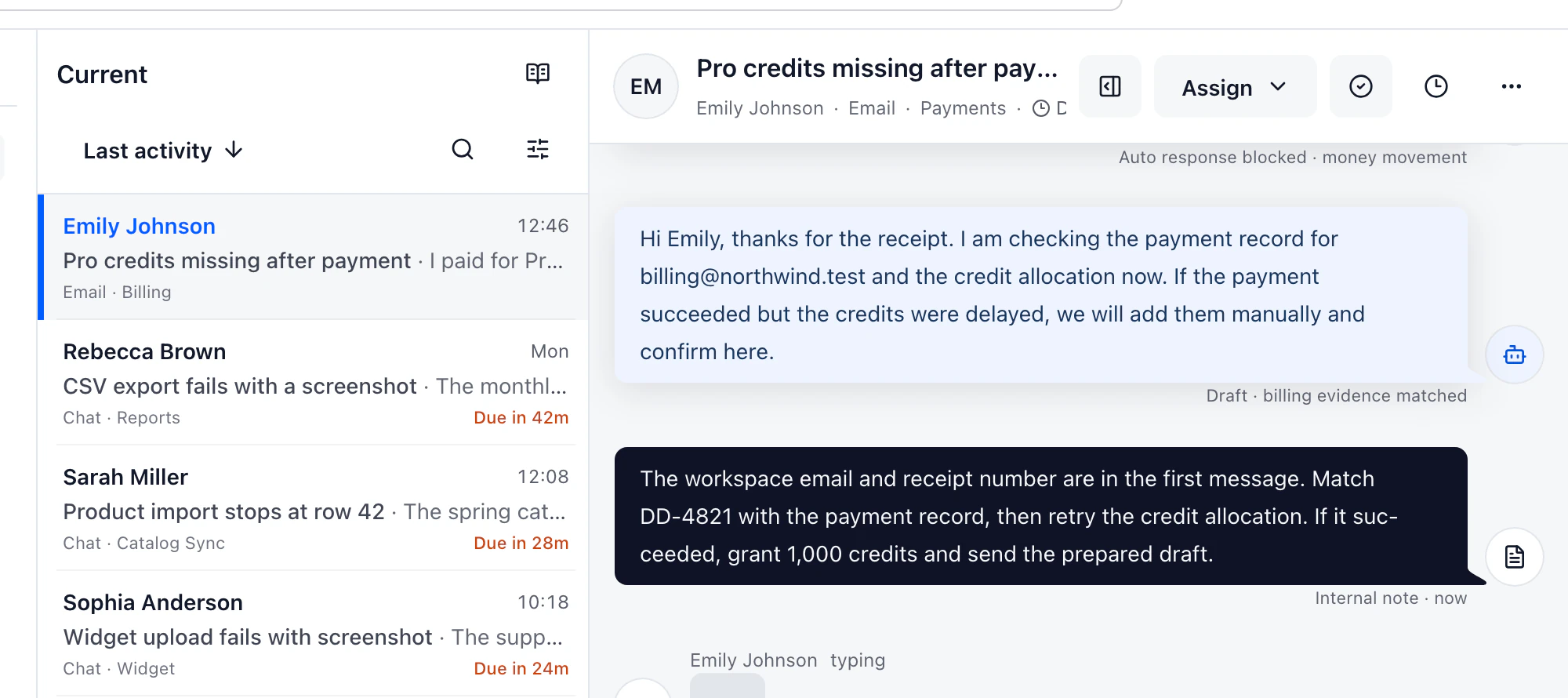
Then test the outgoing path. Reply from the connected address, include an attachment and simulate a provider failure. The conversation should show whether delivery succeeded, failed or will retry. Agents should never have to infer delivery from the absence of an error banner.
Add automation after the queue works
Automation comes later. A receipt acknowledgement, a route for a known billing address and a reminder for waiting customers are useful because their behaviour is narrow and easy to inspect. A rule that cannot explain why it moved or closed a conversation becomes expensive the first time the queue is busy.
AI needs the same discipline. Summaries and cited drafts can reduce reading and repetition. They should expose missing evidence and keep legal, billing, privacy, deletion, abuse and security decisions with an authorized person. A confident unsupported reply is not saved time. It is a future escalation.
Measure the work you can actually change
Use metrics that can change an operating decision. First meaningful response, backlog age, reopen rate, SLA breaches and transfers point to customers who waited or work that bounced between teams. Total messages and total generated drafts mostly measure activity.
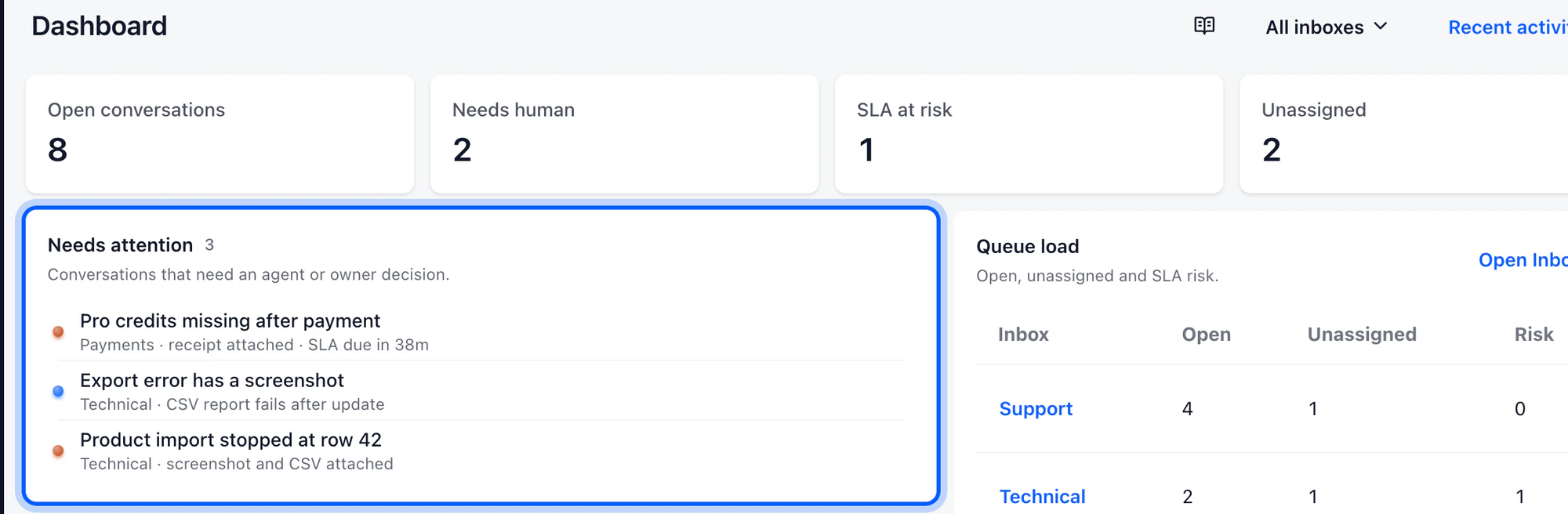
Before comparing vendors, map one ordinary week. Mark how requests arrive, where ownership is decided, which facts agents look up, which replies need approval and what happens when delivery fails. Use several of those conversations in every trial instead of relying on a feature checklist.
The useful outcome is fewer hidden states. The queue shows what exists, assignment shows who acts next, the timeline keeps the reason for a decision and delivery status tells the agent whether the customer heard it. That is a larger improvement than making email look more modern.